Blocky Pixels, Persistent Ghosts: Why Britain Can’t Log Off Its Dead Teletext
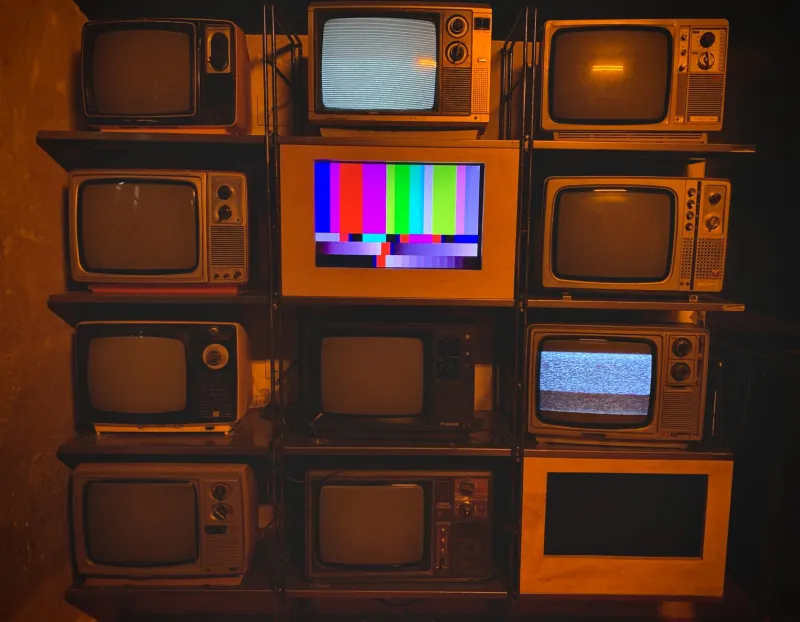
The first thing to understand about Ceefax is that it never really left. It simply stopped being broadcast. One moment it was there — a national oracle you summoned with three digits and a remote control — and then, with the digital switchover, it was gone. No funeral. No montage. Just a blank channel and a generation of viewers left wondering where the football scores had gone.
In 2026, that absence has become its own kind of presence. Search hard enough and you will find archived page grabs, fan-run emulators, teletext art collectives and Raspberry Pi setups that pipe blocky headlines into modern flatscreens. The dead service has not been resurrected so much as allowed to haunt the hardware. It is Britain’s most mundane ghost story: a country that once read the news in chunky pixels, still looking for the ghost in the set-top box.
A National Oracle in 40 Characters
Teletext was never meant to be romantic. It was a utilitarian miracle: news, weather, sport, holidays and TV listings, crammed into a handful of colours and a character grid that made every headline look like a ransom note written by an accountant. Ceefax arrived on the BBC in the 1970s; ITV’s Oracle and later Teletext Ltd offered their own rival pages. For decades, it was simply how Britain checked things.
But there is a strange intimacy to that constraint. A teletext page could not shout. It had to be concise, sequential, almost whispered. You did not scroll a feed; you waited for page 302 to cycle round. You learned the rhythm of the carousel. You developed favourites. Page 888 for subtitles. A certain page for the football results. Another for the weather map that looked like a primary school geography project beamed from space.
That waiting changed the information. It made the news feel like a transmission from somewhere else — a low-budget oracle that spoke in numbered verses. When the service finally went dark, it took that rhythm with it. Modern news is infinite and immediate. Teletext was finite and slightly awkward. Perhaps that is why it still feels eerie. It behaved less like a website and more like a ghost that had learned to count.
The Ghost in the Subtitle Stream
The most haunted corner of teletext is page 888. For deaf and hard-of-hearing viewers, and for anyone who ever watched television with the sound down, that page was a lifeline. Subtitles arrived in chunky blocks, often lagging a second behind the dialogue, occasionally mangling a name or a joke into accidental poetry. It was functional. It was also oddly moving: a machine trying to keep up with human speech, one character at a time.
When people remember Ceefax, they often remember page 888 first. Not because it was glamorous, but because it was present. It sat beneath the programme like a quiet annotation. In repeats and archive clips, those subtitle pages now look like evidence of a lost national habit: a country that trusted a set-top box to tell it what was happening, even when the picture was perfectly clear.
The afterlife of those pages is scattered and unofficial. Enthusiasts have archived thousands of screenshots. Some run teletext servers that recreate the carousel experience online. Others have built hardware that pipes old-style pages into modern homes, complete with the soft click of a remote that no longer exists. These are not grand memorials. They are small, obsessive acts of maintenance — the digital equivalent of leaving a light on in a room nobody uses.
A Séance With a Scart Lead
There is something deeply British about the revival. It is not a blockbuster nostalgia industry. It is shed-based. Someone has a spare Raspberry Pi, a old television, a soldering iron and a stubborn belief that page 101 should still exist. The results are shown off in forums and at small events, often with the same tone of mild embarrassment that accompanies any national obsession.
And yet the effect is uncanny. Watch a modern teletext emulator for long enough and the present tense starts to slip. The headlines might be current, but the format is from another century. The colours are wrong for now. The font is too square. The carousel is too slow. It feels like receiving a transmission from a Britain that never quite switched off — a parallel country where the news still arrives in numbered pages and the weather map is always a little bit threatening.
This is where teletext becomes genuinely weird. It is not just nostalgia for a technology. It is nostalgia for a particular relationship with information: slower, more deliberate, less algorithmic. You did not get served a feed. You chose a page. You waited. You were, in a small way, participating in a ritual. In 2026, when every platform is trying to predict what you want before you know it yourself, that ritual feels almost occult.
Why We Keep Returning
Britain has a long history of haunting its own infrastructure. We tell ghost stories about phone boxes, motorway services, abandoned cinemas and seaside arcades. Teletext fits that pattern exactly. It was never glamorous, never designed to be remembered. It was just there, in the corner of the living room, quietly cycling through the day.
That is why the fan revivals matter. They are not trying to bring back the past wholesale. They are keeping a small, specific ghost alive: the feeling of pressing 888 and waiting for the words to appear. The feeling of a national oracle that spoke in blocky pixels and never asked for a login.
The analogue signal is gone. The set-top boxes are mostly landfill. But somewhere, on a server or a spare screen, page 888 is still cycling. Still waiting. Still slightly behind the dialogue. If you know where to look, you can still read the news the way Britain once did — one numbered page at a time, in the glow of a ghost that refuses to be switched off.