The Field Beyond the Wi-Fi: British Folk Horror and the Mood of 2026
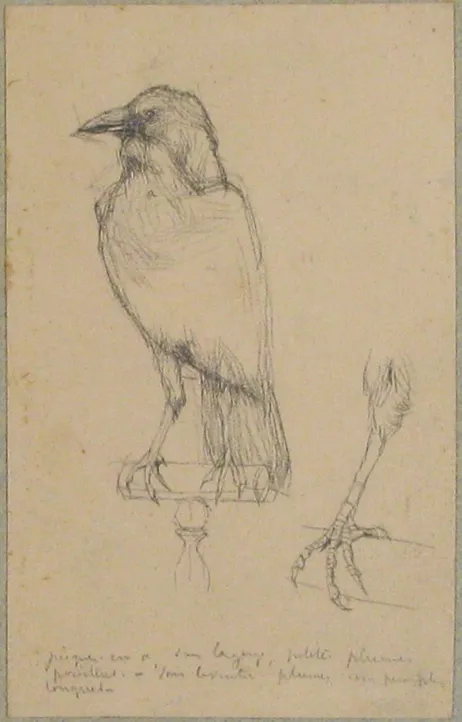
Photo: Charles Méryon, CC0, via Wikimedia Commons
The raven turns up in the same place every morning. On the fence post past the last house on the lane, where the tarmac gives up and the footpath starts, sitting with the patience of something that has read the paperwork. Corvids get a bad reputation in this country for reasons that are mostly historical and entirely deserved. They watch. They remember. They are the only neighbours you cannot pretend not to have noticed.
It is November 2026, and the raven is on trend. British folk horror has, once again, decided it has something to say, and this time it is saying it in cinemas, in streamer slates, in fiction podcasts recorded in kitchens in Sheffield and in the sort of rural-set thrillers that get described as 'atmospheric' by people who mean 'I was unwell for three days afterwards'.
The Landscape Was Always the Villain
There is a reason this stuff is British and not, say, American. The American wilderness is vast and indifferent; the American horror story is about being alone in it. The British countryside is small, worked over, and absolutely full of people who have been here longer than you and who have opinions.
The great suspicious trio still holds up: Witchfinder General, Blood on Satan's Claw, The Wicker Man. What they understood — and what the current wave understands — is that the frightening thing about a British village is not that it is empty. It is that it is full, and closed, and polite, and has already decided about you. You are not in the wilderness. You are in someone's field. There is a difference, and the difference is ownership.
What 2026 Actually Feels Like
Here is my argument, and it is not a cheerful one. The revival is not driven by affection for the past. It is driven by a very modern kind of isolation, and the countryside is the perfect place to stage it.
Think about the mood of the country this year. Villages hollowed out by second homes and short lets. Services moved online and then moved again, further away. Broadband that arrives in a van, if it arrives. People who moved out of cities in 2020 and 2021 for space and discovered that space is mostly silence and a litre of heating oil. The rural idyll has never been more photographed or less affordable.
And crucially: connection without company. That is the texture of the decade. We are never offline and often alone, surrounded by hedgerows that have been in the same family since before the Normans while our group chats gently die. Folk horror is the only genre that has ever been any good at dramatising that specific ache — the sense of being watched by something old that does not care about your five-star review of the pub.
The Revenge of the Audio Lane
The most interesting part of the boom is not on screen at all. British horror has always been a radio genre in its bones, and the podcast world has quietly taken over the mantle. Danny Robins' investigations into poltergeist cases and haunted farms did not just popularise the form, they refurbished it: first-person testimony, ordinary people, an insistence on not quite resolving anything. Audio fiction has followed, all drone and dialect and sound design of gorse.
This suits us. A country that runs on hedgerow gossip and a reluctance to make a fuss produces excellent oral horror. We are a nation that will describe something genuinely horrifying for eight minutes and then apologise for taking up your time.
The Raven's Warning
My worry — and this is where the bird on the post looks smug — is that folk horror becomes a look rather than a feeling. You can already buy the t-shirt. There is a version of this revival that is just wet leaves, a linen smock, a harvest crown, and an Instagram caption about the old ways, with all the genuine unease sanded off.
That would be a shame, because the unease is the whole point. The bad version flatters the viewer: what a lovely, eerie place, I must visit. The good version reminds you that you are a visitor, that the land has a memory, and that the people who live there will be perfectly nice to you right up until the moment they are not.
The stuff that will last from this wave is the stuff that refuses the aesthetic. Rural-set horror that keeps the mud, the admin, the petty grudges and the terrible roads. Films that understand a village is not a vibe, it is a set of obligations.
Back to the Fence Post
The raven is not a symbol of anything, incidentally. It is a bird. It wants the bin bag and the possibility of a dropped chip, and it will be there tomorrow, and the day after that, watching me write about it.
But that is exactly why it works as the genre's mascot in 2026. It is old, it is local, it is unbothered, and it has seen what happens to people who move to the country expecting peace. In a year of isolation dressed up as connectivity, the most frightening and most comforting thought is the same one: the field does not know you are there, and it will still be there when you have gone.
Go and see the new stuff. Listen to the podcasts with the lights on. Then walk home past the last house on the lane, and see how you feel about the post at the edge of the footpath. If the bird is still there — take the long way round.