The £2.50 Curse: Five Charity Shop Hauls That Followed Their Buyers Home
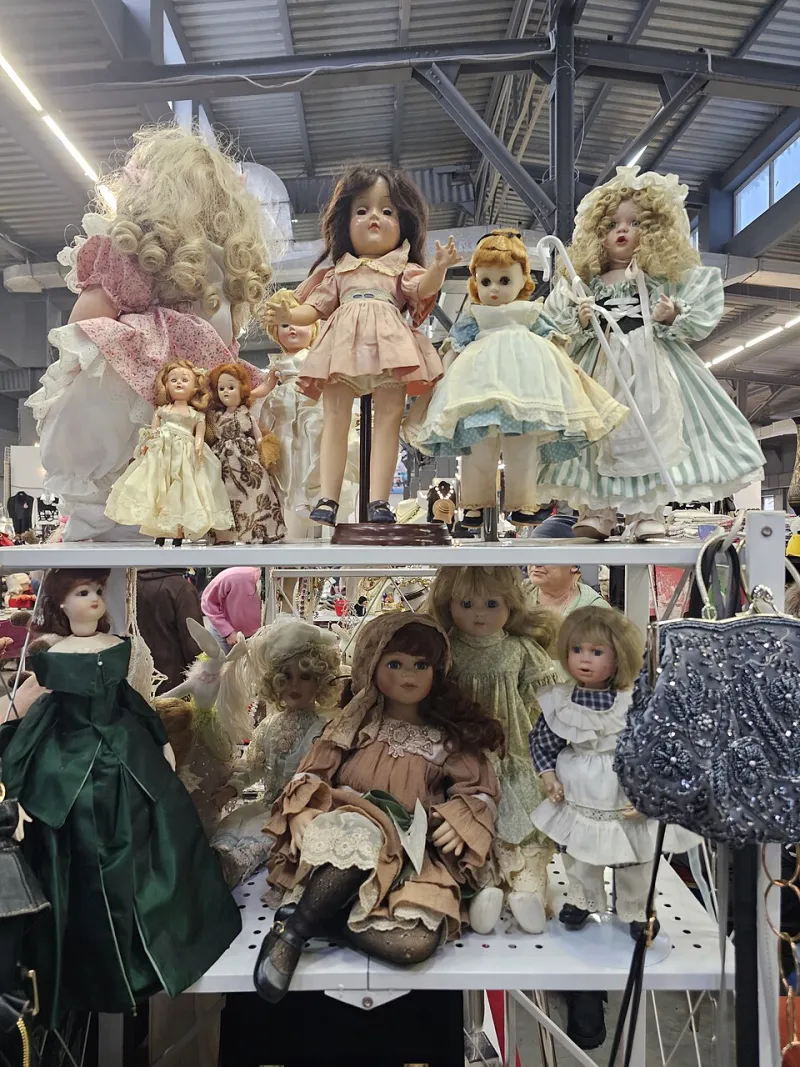
Photo: Tess Mattew, CC BY-SA 4.0, via Wikimedia Commons
There is a particular smell to a British charity shop in November. Dust, damp wool, someone else's fabric softener, and — if you are lucky — the faint suggestion of a story nobody wanted to finish. The rails are heaving at this time of year, swollen with autumn clear-outs and pre-Christmas guilt, and somewhere in that crush of £2.50 knitwear is the one object that will make you stop dead.
That is the real bargain, isn't it. Not the price. The jolt. You go in for a paperback and come out with a taxidermy fox in a waistcoat and a mild sense of being watched. Here are five of the finds that have done the rounds — genuinely reported, heavily embellished, and endlessly reposted — and why we cannot stop clicking on them.
1. The Doll That Came With Instructions — Devon
The story goes like this: a doll donated to a charity shop in north Devon arrived with a handwritten note pinned to its dress. Something along the lines of do not keep her in the bedroom. Staff photographed it, put it online, and the internet did what the internet does, which is lose its collective mind.
Whether the note was a prank, a bereavement, or a bit of theatre from someone with a dark sense of humour, nobody has convincingly established. It hardly matters. The doll became a legend because it arrived with a rule attached, and a rule implies a consequence. A toy is a toy. A toy with an instruction manual written by a stranger is a small haunted house you can carry under one arm.
2. The Box of Unsent Love Letters — Glasgow
A shoebox of letters turned up in a southside Glasgow charity shop, tied with string, dated across the late sixties and seventies, and never posted. Not one of them. The buyer who found them did the decent thing — asked around, posted a few anonymised lines, tried to trace a family — and the response was enormous, because everyone has an opinion on whether you should read them at all.
This is the most quietly unsettling category of charity shop discovery: the abandoned interior life. Someone wrote and wrote and could not bring themselves to send. Then the box survived them, got bagged up by a house clearer who had a van to fill, and ended up on a shelf between a jigsaw and a slow cooker. You can buy a stranger's most private act of cowardice for two quid. That it happens constantly is the frightening part.
3. The Fox in the Waistcoat — North Yorkshire
House clearance, North Yorkshire, a Victorian-style glass case containing a fox in a small tailored waistcoat. Four pounds, reportedly, then resold for many multiples of that once it hit the internet. The eyes, as ever, were the problem. Glass eyes never quite point where you want them to.
Dressed taxidermy sits at the exact crossroads where 'quirky' meets 'why'. It is the animal as furniture, the countryside turned into a knick-knack, and it lands in charity shops more often than you would think when an eccentric uncle dies and nobody in the family wants the parlour fox. If you do buy one, be aware that older specimens were prepared with some genuinely unpleasant chemicals, so keep it behind glass and wash your hands like a grown-up.
4. The Holiday Album of Strangers — Blackpool
Every few months, someone posts an entire stranger's photo album: Blackpool seafront, sunburn, a donkey, a woman waving outside a guesthouse, dates and first names pencilled on the reverse of each print. Found in a charity shop, bought for pennies, brought home, and then the guilt sets in.
The compulsion to identify these people is very British and very strange. We do not want to return the album so much as we want to solve it. There is something unbearable about a life being that well documented and that thoroughly discarded, so the internet appoints itself next of kin. Occasionally it works. Usually it does not, and the album stays on a shelf, a family you now feel responsible for.
5. The Dress With a Name Stitched Inside — South Wales
A seventies wedding dress, donated in a bag, with a name and a date hand-stitched into the lining. The buyer posted the details and the usual armchair detectives went to work on marriage records, convinced they were about to uncover a tragedy. What they found was mostly ordinary: a marriage, a divorce, a life. Which is somehow worse.
Wedding dresses are the most emotionally loaded thing on any charity shop rail and the least likely to be bought by anyone who needs one. They sit there for months, monumental and slightly accusatory, and every so often one of them comes with a name attached like a return address.
Why We Cannot Look Away
The obvious explanation is that uncanny objects are cheap theatre. You get a genuine physical reaction — the prickle on the back of the neck — for the price of a coffee, and you can tell the story down the pub for years.
But there is something more honest underneath. Charity shops are the country's informal museum of ordinary lives, and most of what ends up there is the stuff nobody was willing to throw away but nobody was willing to keep. Buying it is a small act of rescue. Buying the eerie version of it is a way of admitting that death, memory and clutter are all tangled together, and that we will all be a box of unsent letters one day.
So by all means go rummaging this winter. Buy the strange little painting. Buy the doll. Just check the seams for bedbugs, be respectful of anyone whose name is on the label, and if the seller has written you a warning note — take it seriously. Probably.