Nobody Can Find the Film They All Remember: Britain’s Phantom Horror Canon
Photo: Danielteolijr, CC BY-SA 4.0, via Wikimedia Commons
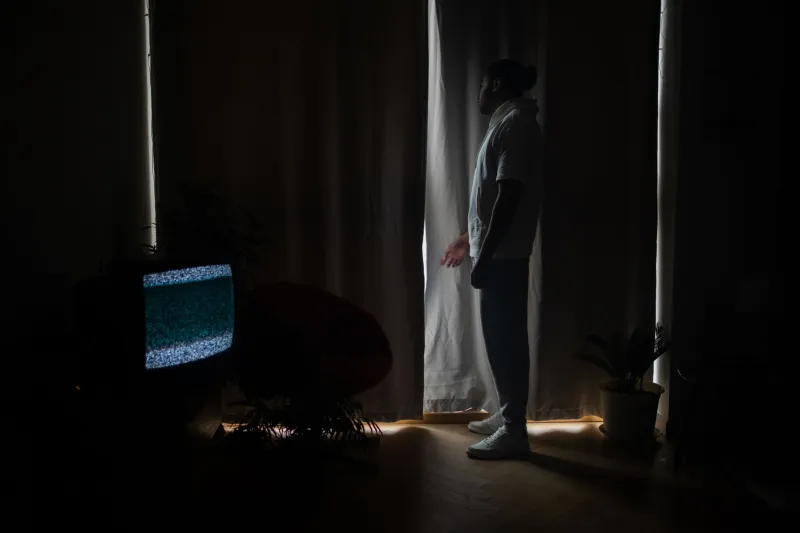
There is a thread on a British horror forum that resurfaces every eighteen months or so. The poster is always different. The details are always the same: a late-night broadcast, a family in a remote cottage, a thing in the cellar that was never fully shown. The title they half-remember doesn’t appear in any database. The British Film Institute has no record of it. The British Board of Film Classification has issued no certificate. And yet, every time the thread appears, someone else replies: I saw it too.
This is the peculiar gravity of the lost British horror film. Not the famous missing reel — the excised footage from The Wicker Man, the holy grail of the archive — but the humbler phantom: straight-to-video oddities, regional late-night filler, films that may never have existed at all. They survive as folklore, passed between strangers on message boards, and they are more powerful for it.
The Memory Is the Only Print That Survives
Lost-media hunting is usually framed as a technical pursuit: hard drives, spreadsheets, eBay alerts, the slow drip of archive digitisation. But the British phantom film is often an oral tradition wearing a VHS sleeve. Someone remembers a title card in a font that doesn’t quite exist. Someone remembers a scene involving a stairwell and a wet floor. Someone remembers being frightened in a way that feels disproportionate to anything that could be broadcast on Channel 4 at 1.40 a.m.
That is the first clue. The films people chase are rarely the ones that were merely obscure. They are the ones that arrived at the wrong age, in the wrong room, with the wrong amount of sleep. A childhood viewing becomes a private mythology. The film is not just missing; it is unverifiable. And an unverifiable memory is a story that can never be settled.
A Shadow Cast by the Video Nasty Panic
The 1984 Video Recordings Act and the Director of Public Prosecutions’ list of “video nasties” gave British horror a forbidden shelf that never quite went away. Tapes were seized from newsagents. Titles circulated in plain boxes. The mere existence of a film became a rumour, and the rumour outlived the tape. Forty years on, the phantom film often carries that same charge: the sense of something that was not allowed, and therefore must be worth finding.
The irony is that most of the films the DPP pursued are now fully accounted for — reclassified, reissued, discussed to death in podcasts. The true lost films are quieter. They are the ones that were never banned, only forgotten. A regional release that played three cinemas and a caravan park. A shot-on-video anthology that went straight to a rental shop in Rhyl. A public information film with a horror sensibility that nobody thought to preserve because nobody thought it was important.
The Hunters: Car Boots, Spreadsheets and the Kindness of Strangers
The people who chase these films are not a monolith. Some are archivists with access to databases and the patience of saints. Some are collectors who haunt car boot sales and charity shops, buying boxes of dead men’s tapes for £3 and finding nothing but Heat and The Bodyguard. Some are forum sleuths who can identify a font from a half-remembered title card and a compression artefact from a single screenshot.
They share a method: ask nicely, document everything, and accept that most searches end in nothing. The lost-media communities — the wikis, the subreddits, the Discord servers — run on a strange blend of obsession and generosity. A stranger will digitise a tape for free because they understand that the tape is not the point. The search is. The hope is that somewhere, in a loft in Doncaster or a skip in Dundee, a copy survived.
And sometimes it does. A fragment turns up. A title is confirmed. A distributor’s paperwork surfaces. The thread closes, satisfied. But more often the film remains exactly where it has always been: in the gap between memory and evidence.
Why We Need It to Stay Lost
There is a temptation to treat the phantom film as a failure of preservation, a gap in the national record that ought to be filled. But the absence is doing something. It gives British horror a folklore it could not otherwise have — a canon of whispers, half-titles and did-you-see conversations. The film that never was is a blank screen, and we project onto it the things we are actually afraid of: being wrong, being alone, being the only person who remembers the thing in the cellar.
In an age when almost everything is streaming somewhere, the lost film is a stubborn remainder. It cannot be paused, rated or added to a watchlist. It can only be described. And description, as any horror fan knows, is often scarier than the reveal.
The search will continue. Someone will post the thread again next year. Someone will say they saw it. And somewhere in the archive of the internet, a film that never was will keep playing to an audience of the curious — which is, when you think about it, exactly the kind of cinema The Raven was built for.