Please Sign Here: The New-Build Ghost Story and the Horror of the Management Fee
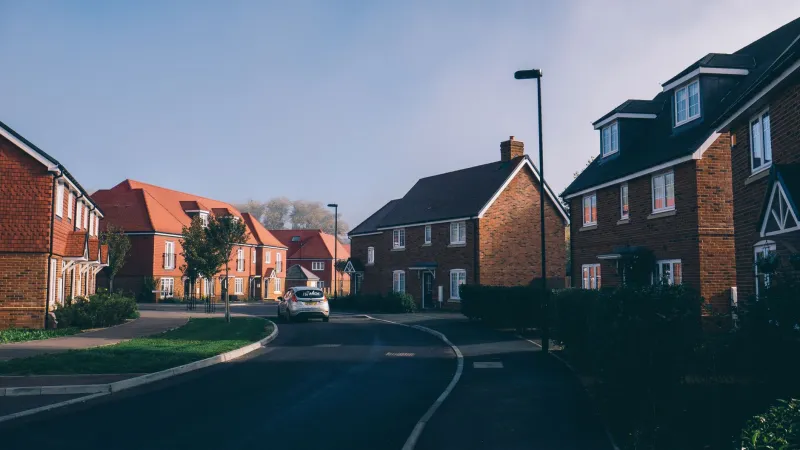
The show home is immaculate. The carpet is a grey so neutral it feels like a legal disclaimer. There is a bowl of fake lemons, a stack of cushions no one has ever sat on, and a sign by the door asking you to remove your shoes. It is also, in a growing number of British horror stories, the most haunted room in the country.
For decades, the UK’s ghost stories lived in crumbling manors, wet churchyards and cottages with beams low enough to give you a concussion. The haunting was inherited. The house had history. Someone in a nightgown had once been terribly wronged, and now the plumbing screamed about it. In 2026, though, a new wave of horror fiction and film has found something fresher and far more unsettling: the new-build estate. The cul-de-sac. The shared-ownership flat. The development with a glossy brochure, a play area the size of a bath mat, and a ghost that can only be summoned via the video doorbell.
The show home as séance
The show home is a brilliant setting because it is already a lie you are invited to walk around in. It smells of paint and ambition. The estate agent speaks in a language of soft-closing drawers and ‘village feel’. There is usually a chalkboard in the kitchen with the words ‘fresh eggs’ written on it, as if the developer is trying to imply a farmer exists. Nobody lives there. Nobody has ever lived there. It is a stage set for a life that has not happened yet — which is, if you think about it, exactly what a haunted house is.
Recent British horror has picked up on this. The stories tend to begin not with a gothic inheritance but with a deposit. A couple stretches themselves to buy a two-bed with a ‘Juliet balcony’ — a railing in front of a window, as if Romeo were a man on a step ladder. They get the keys. They get a welcome pack. They get a neighbour who says the previous owners left ‘quite suddenly’. Then the smart meter starts doing something strange, and the doorbell camera records a figure standing in the hallway at 3 a.m. The figure is not holding a candelabra. It is holding a snagging list.
A ghost you can pair with your phone
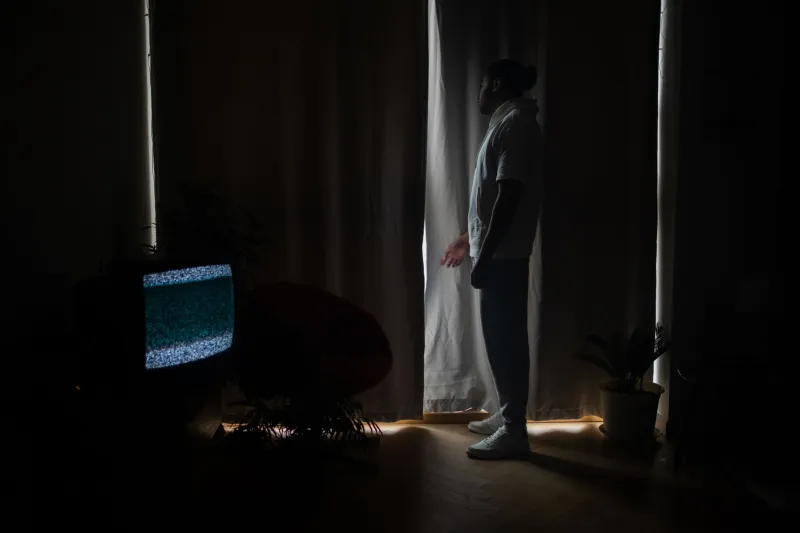
What makes these new hauntings different is the technology. The horror arrives through the infrastructure of modern British living: doorbell cameras, smart locks, app-controlled heating, broadband routers with names like TALKTALK-4F2C. In older ghost stories, the supernatural was a breach in the fabric of the house. In new-build horror, it is a breach in the wi-fi. The ghost does not rattle chains; it sends a notification. The lights flicker because the smart bulb has lost connection. The front door unlocks itself because someone — or something — has been added to the household account.
That should be silly, and sometimes it is. But it is also horribly effective, because it maps onto a real anxiety: the feeling that our homes are no longer entirely ours. We do not own the boiler; we lease it. We do not control the heating; we negotiate with an app. We do not know the neighbours; we know their footsteps through a wall so thin it could be a curtain. The new-build ghost is not an ancient evil. It is an unauthorised user.
The language of the brochure
The best of this new fiction understands that estate-agent speak is already a kind of spell. ‘Contemporary living.’ ‘Vibrant community.’ ‘A sense of place.’ ‘Convenient for the station.’ These phrases are designed to conjure a world that does not yet exist. The buyer is asked to imagine themselves into the empty rooms. The horror story simply takes that invitation literally. Something else has already imagined itself in.
And the language of warranties is even better. The NHBC guarantee. The snagging list. The management fee. The service charge. The estate rentcharge. These are the incantations of modern British property, and they are already faintly terrifying. A ghost story set in a new-build can make a threat out of a clause. The horror is not that the house is possessed. It is that the possession is subject to an annual increase and a 999-year lease.
Why the new-build is the perfect haunted house
There is a snobbery to old haunted-house fiction. The ghosts live in places with heritage. The new-build has no heritage, which is precisely why it is interesting. It is a place where history has been scraped away and replaced with a marketing suite. The past is not buried in the foundations; it has been airbrushed out of the brochure. So when something does surface — a room that should not be there, a neighbour who remembers a different layout, a child’s handprint on a wall that was only plastered last month — it feels like a glitch in the official story.
That is the real fear in these stories: not that the house is old, but that it is new and already wrong. The developer cut corners. The walls are thin. The drainage is questionable. The community is not a community; it is a WhatsApp group with a grudge. The ghost is just another defect, one that cannot be fixed by the site manager.
The terror of the management fee
If I have one criticism of the trend, it is that too few of these stories go all the way. They give us a spooky doorbell and a flickering smart meter, then retreat into standard jump scares. The truly frightening material is sitting right there in the paperwork. A haunted estate where the management company charges you for the privilege of being haunted. A ghost that only appears when the service charge is due. A poltergeist that files a complaint about your bins. British property anxiety is a rich vein, and 2026 horror should be mining it with a digger.
Still, the wave is arriving. You can see it in small-press novels, streaming films and short fiction that treats the new-build not as a punchline but as a pressure cooker. The estate is a place where people are stretched thin, where the walls are thin, where the promises are thin. Something was always going to come through.
Here at The Raven, we are not saying your new-build is haunted. We are saying that if the doorbell camera sends you a motion alert at 3 a.m. and there is nobody there, you should probably check the management fee before you check the attic. The attic is a cupboard. The management fee is the real monster.
And if a man in a high-vis jacket asks whether you have considered the ‘community aspect’, do not answer. He is not an estate agent. Not anymore.