Adjourned to the Void: The Strange Comfort of Britain’s Parish Council Webcasts
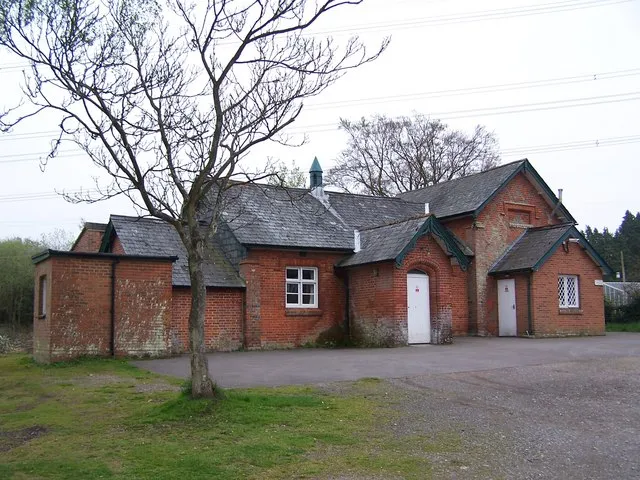
Photo: David Martin, CC BY-SA 2.0, via Wikimedia Commons
The fixed gaze
At 7.02pm on a Tuesday, a webcam in a village hall focuses on an empty table. There is a jug of water. There is a stack of papers. There is a wall clock whose tick you cannot hear but can somehow feel. Then a clerk enters, adjusts a microphone, and says something about item four. The meeting has begun.
This is not a scene from a low-budget horror film. It is a parish council meeting, uploaded to YouTube, where it will sit for years like a fly in amber. Across Britain, hundreds of town and parish councils now broadcast their proceedings. Some use Zoom. Some use a fixed tripod camera at the back of the room. Some use a laptop balanced on a box of minutes. The result is one of the most quietly unsettling archives on the internet — and, for a certain kind of viewer, one of the most comforting.
As of 2026, the parish council webcast is one of the last genuinely unedited formats left. No cuts. No music. No thumbnails with red arrows. Just public servants, a carpet that has seen better decades, and the long, strange business of local democracy.
Found footage by default
The folk-horror comparison is almost too easy. A fixed camera. A fluorescent hum. A group of people in a room that feels older than the building itself. But the unease is not supernatural. It is procedural.
Watching a council meeting is like watching a ritual whose meaning has been lost but whose order remains. The chairman invites declarations of interest. The clerk reads the minutes. Someone asks about the allotment fence. Someone else asks whether the pothole on the lane has been reported. A councillor says ‘I’ll second that’ and the room moves on. The camera does not blink. The camera never blinks.
This is found footage in the most literal sense: nobody composed it for an audience. It was recorded because it had to be. The result is a document of a place, a night, a group of people trying to keep something running. And because it is unedited, it preserves everything the official minutes leave out — the pauses, the coughs, the glances, the moment a councillor’s phone buzzes against the table.
The silence between motions
The horror, if there is one, lives in the gaps. Not the agenda items themselves. Planning applications are not frightening. Grass cutting contracts are not frightening. But the silence after a motion is seconded, before the vote, has a texture all its own. It is the silence of a room full of people waiting for someone else to speak first. It is the silence of civic duty.
In a horror film, silence is a threat. Here, silence is just the sound of local government working. But the two are closer than we like to admit. Both depend on rules nobody fully remembers. Both require a chair. Both can be derailed by a single objection.
And then there is ‘any other business’. Three words that can open a void. A councillor mentions a fallen tree. Another mentions a charity quiz. The clerk makes a note. The camera keeps rolling. You realise you have been watching for forty minutes and nothing has happened, and yet everything has happened, because a place has been recorded. A place has been remembered.
An archive of small things
These videos are not just eerie. They are useful. They preserve the ordinary infrastructure of British life: the bus shelter, the war memorial, the village green, the footpath that floods every winter. They record the arguments about dog bins and drainage. They show who was in the room and who was absent. They are a slow documentary about belonging.
In a country where local newspapers have thinned out and council coverage has shrunk, the webcast has become a strange kind of witness. It is not journalism. It is not entertainment. It is something older: a record. The camera stays on the room, and the room keeps going.
That is why the folk-horror reading works so well. Folk horror is often about landscapes and customs that outlast the people in them. Parish council meetings are the same. The faces change. The agenda returns. The minutes are approved. The camera keeps watching.
Insomniac cinema
There is a practical reason these videos have found an audience beyond the parish boundary. They are soothing. Not in a cynical way. In the way that a long, low-stakes conversation can be soothing at 3am. The voices are ordinary. The stakes are local. Nobody is shouting about the end of the world. Someone is asking whether the clerk can chase the council tax precept.
For insomniacs, the parish council webcast is the anti-doomscroll. It is slow. It is repetitive. It has a beginning, a middle and an adjournment. You can fall asleep to it without feeling you have missed anything important. And if you wake up, the meeting will still be there, possibly still discussing the same item.
For folk-horror fans, it is something else: a reminder that the most unsettling images are often the least dramatic. A fixed camera. A fluorescent light. A room that is not quite empty. A voice saying ‘item five’ into the dark.
How to watch
Choose a council. Any council. Start in the middle, not at the beginning. Let the procedural language wash over you. Notice the clock. Notice the carpet. Notice the way the chairman says ‘thank you’ to nobody in particular. Wait for the silence after a seconder. That is the moment. The camera does not blink, and neither do you.