Coffin Lid, Folding Chair: Britain’s Village Hall Ghost Plays and the Terror of the Interval
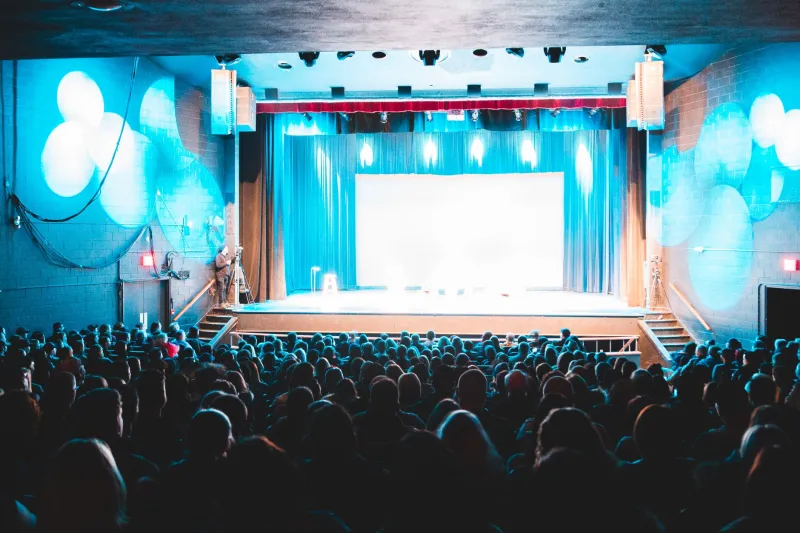
The car park is a slab of frost and gravel. Inside, the hall smells of floor polish, urns and the ghost of a hundred church jumble sales. A handwritten poster in the window promises The Unquiet Tenant: A Ghost Play in Two Acts. Beneath it, in smaller letters: Raffle. Licensed bar. Please return chairs to the stack.
This is Britain’s winter folk theatre, and it is in full swing in 2026. All over the country, in parish halls and memorial institutes, amateur companies are dimming the lights with a borrowed dimmer board and asking audiences to believe that a bedsheet can be a spectre. The tickets are cheap. The stakes are oddly high.
Amateur night, professional dread
The production values are the point. A village hall ghost play runs on one desk lamp, a torch held under an actor’s chin, and dry ice produced by a kettle and someone’s nan’s steamer. The set is a folding screen and a chair. The sound effects come from a laptop, or from a man called Keith shaking a sheet of metal behind the curtain.
And yet these shows are frequently more unsettling than a £200 million horror film. There is a simple reason: cinema shows you the monster. A village hall makes you imagine it. The gap between what is meant to be terrifying and what is actually happening on stage — a middle-aged accountant in a nightdress, a door that refuses to close properly — lets the mind do the haunting. Bad lighting does not ruin the ghost. It gives it somewhere to hide.
The tropes of the parish phantom
The scripts are written by retired geography teachers, keen members of the WI, and at least one man who has “always fancied himself as a bit of a writer”. They lean on a familiar cabinet of curiosities. The wronged spinster. The squire’s portrait with the eyes cut out. The sealed room above the stables. The railway ghost who warns of the 5.17 to Ipswich. The sceptical vicar. The final twist in which the medium was dead all along.
You will also find localised jokes that land only within a ten-mile radius: the bypass, the new housing estate, the parish council’s refusal to fix the church clock. A character will say “don’t go up them stairs” and half the audience will murmur it along with them. The ghost will wear a charity-shop nightdress. The programme will thank the Co-op for the mince pies, even though it is February.
The tradition runs deep. Dickens and M.R. James are the patron saints, and the British Christmas ghost story — kept alive by the BBC’s annual adaptations — has a long tail that reaches right into the village hall. What happens on these stages is not sophisticated horror. It is something older: a community telling itself a story about the dark, with the dark represented by a man in a hat from the dressing-up box.
The interval is the real haunting
But the true terror arrives at half-time. The curtain closes. The lights come up. And you are trapped in a room with everyone you have ever avoided in the post office.
The raffle is not optional. It is a social contract. A strip of tickets costs 50p. The prize is a hamper, or a bottle of something, or a voucher for a haircut. The draw is conducted with the solemnity of a coroner’s court. Numbers are read out. People whoop. People who do not whoop sit very still and examine the parquet floor.
This is where the folk horror lives. Not in the ghost, but in the interval small talk: the damp in the church hall, somebody’s hip operation, the proposed housing development, the state of the Kershaws’ fence. You are known here. You are on the rota. In a village hall, community is both a comfort and a form of surveillance. The ghost play is merely a pretext. The real ritual is being seen, and being asked to help stack the chairs afterwards.
Keeping the lights on in 2026
The form is not dying. If anything, it is having a quiet revival. Companies with names like the Withering Players, the Marsh End Amateurs and the Bramblewick Thespians are filling halls in Lincolnshire, Norfolk and the Yorkshire valleys. Younger members are joining, often drawn in by a parent or a partner. Clips of the ghost’s entrance — filmed on a phone, lit by a single torch — occasionally escape onto TikTok, where they are watched with affectionate confusion by people who have never been to a village hall in their lives.
The economics remain hand-to-mouth. Tickets are £6. The raffle covers the roof fund. The rights to a proper play are too expensive, so the script is homegrown. The winter slot, after panto and before spring, is the only one available. And yet the hall fills.
Why it beats the multiplex
There is a particular kind of dread that comes from driving home after a village hall ghost play. The windscreen fogs. The lanes are black. You have seen a ghost made of a sheet, and you have also seen your neighbour’s new conservatory. You know exactly where you live, and you know that next year you will be asked to sell raffle tickets.
That is the horror of amateur night. Not the phantom, but the interval. Not the scream, but the folding chair. The ghost is just an excuse to sit together in the dark and pretend, for an hour or two, that the worst thing out there is a man in a hat. The raffle ticket in your pocket says otherwise.