The Last Rinse: A Late-Night Atlas of Britain’s Haunted Launderettes
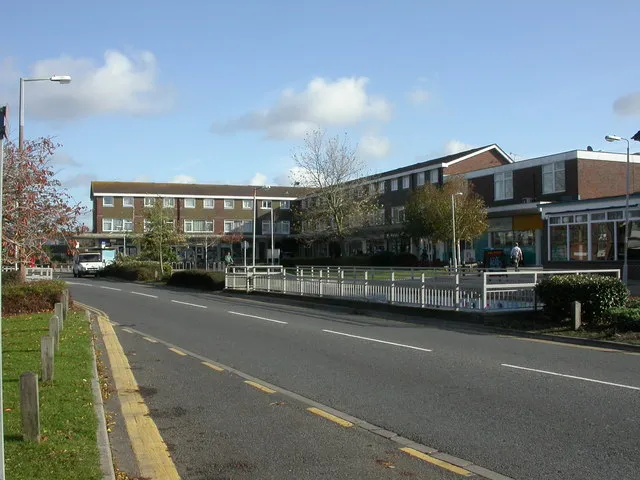
Photo: Mike Faherty, CC BY-SA 2.0, via Wikimedia Commons
At 11:40 on a wet Tuesday in November, the high street has the look of a stage after the audience has gone. The charity shop is dark. The bakery is dark. The pub is doing that low, defensive murmur it does when it wants to seem busier than it is. Then there is the launderette: one bright box of white light and tumbling colour, humming to itself like a fridge with a secret.
This is not quite a ghost story. Or rather, it is the sort of ghost story Britain tells without noticing. The launderette is a room where time is measured in cycles, where strangers sit facing the same wall, and where the only drama is whether the spin will finish before the dryer does. In 2026, as more of the high street becomes click-and-collect and shuttered promise, these rooms feel stranger and more necessary. They are among the last public interiors where you can stay for an hour without buying a drink or explaining yourself.
The Brightest Room After Closing
A good launderette has a particular atmosphere: hot cotton, powdered detergent, the faint chemical sweetness of fabric softener, and the steady percussion of coins dropping into metal. The lights are always too bright. Not clean-bright, exactly, but institutional-bright, the kind that shows every scuff on the lino and every watermark on the ceiling tiles. It is a lighting scheme designed for stains, not for comfort.
That is part of the haunting. Launderettes refuse the moody darkness we expect from old places. They are aggressively lit, yet still feel liminal. You are between states there. Between dirty and clean. Between home and the street. Between one week and the next. The washing machine is a small, sealed weather system, and you are its anxious god, watching through the porthole for signs of favour.
In one seaside town I know, the launderette sits under a block of flats and keeps its door propped open with a bucket. The attendant—not always present, but never entirely absent—has a radio tuned to a station that seems to play only mid-tempo songs from before anyone in the room was born. Nobody changes it. There is an unspoken rule about this. The radio is not entertainment. It is infrastructure.
A Folklore of Small Losses
Every launderette has its minor mythology. The sock that vanishes is the oldest joke and the oldest genuine mystery. You count them in, you count them out, and somewhere between the drum and the dryer a single sock has been taken. Not stolen, exactly. Taken. The machine does not return it. There is no lost property box for the sock’s family to claim.
Then there are the items left behind: a child’s cardigan, a tea towel, a single trainer, a paperback with its cover curled from steam. These objects accumulate in plastic bags behind the counter or on top of the soap dispenser until they become part of the furniture. They are not quite rubbish and not quite treasure. They are evidence that someone was here and then was not.
Attendants have their own stories, though they rarely tell them as stories. They tell them as complaints. The customer who put a whole duvet in and then left for four hours. The person who comes in every Sunday, washes one tea towel, and sits for the full cycle without ever looking at a phone. The man who asked to be shown how the dryers work, was shown, and then asked again the following week. You can call this loneliness if you like. In a launderette, it looks more like ritual.
There is a folk belief—half joke, half warning—that certain machines are unlucky. Machine 4 eats socks. Machine 2 leaves a grey film on anything white. The big dryer at the back runs hot enough to shrink a jumper into a tea cosy. In one northern town, I was told that the far machine is where you put things you do not want to keep. Not a curse. Just a practical superstition. Everyone needs a place to abandon a fading bath mat without admitting it.
The Chair by the Dryer
The waiting chair is the true heart of the launderette. It is usually fixed to the floor, or wedged between a table and a wall, and it has the posture of a chair that has heard everything and will repeat none of it. From this chair you can watch the whole street through the window. You can see the bus that will not come, the delivery rider cutting the corner, the man walking his dog with the air of someone who has already had this argument at home.
In 2026, the waiting chair has become a kind of accidental social club. The high street has lost banks, post offices, department stores and a good many pubs. The launderette remains one of the few places where you can sit indoors among strangers without a time limit. Some have Wi-Fi. Most do not. This is not always a problem. People talk in launderettes in a way they do not talk on trains. Not much. But enough. The weather, the price of a wash, the fact that the dryer is taking the mickey again.
And then there is the etiquette. Do not take a machine that is clearly about to be claimed. Do not move someone’s basket, even if it has been there for twenty minutes and is technically in the way. Do not make eye contact through the porthole. Do not, under any circumstances, offer to help someone fold a fitted sheet unless you are prepared to become their friend for life.
Why the High Street Needs Its Nightlight
The launderette feels haunted because it is stubborn. It has survived the closure of everything around it. It has survived the rise of the home washing machine, the cost-of-living squeeze, the slow death of coin-operated anything. In some towns it is now the only place where you can reliably find a light on after 10 p.m. that is not a takeaway or a bus shelter.
That is where the strange feeling comes from. Not ghosts, exactly. More like the presence of all the people who have stood in that same spot, watching the same drum turn, waiting for the same small completion. The launderette is a room full of unfinished business. It is also a room where unfinished business is, briefly, allowed to sit down.
So next time you pass one at night—fluorescent, half empty, radio murmuring—do not dismiss it as a relic. Look at the chairs. Look at the lost-property bag. Look at the machine that everyone avoids. It is not just a place to wash clothes. It is a late-night atlas of British life, still spinning, still humming, still waiting for the last rinse to end.