Red Ink, Missing Frames: The Censor’s Archive as Britain’s True Horror Canon
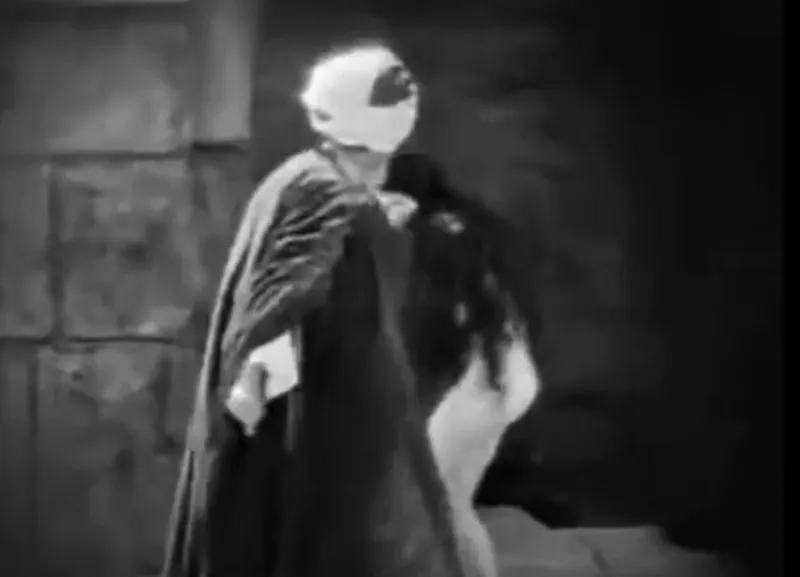
Photo: Paramount Pictures, Public domain, via Wikimedia Commons
Most people treat a BBFC certificate the way they treat a fire exit sign: useful, unnoticed, and slightly insulting if you think about it for too long. But the British Board of Film Classification has never just been a gatekeeper. Since its formation in 1912, it has been an accidental archivist of national anxiety. Every cut, every ban, every sternly worded note about a scene involving a kitchen knife and a woman alone in a house is a data point. Put enough of them together and you get something stranger than a rulebook: a shadow canon of British horror, assembled by the people who were trying to protect us from it.
The Ledger as a Genre
The BBFC’s case files are not neutral documents. They are arguments. A censor writes down what they see, what they fear, and what they think the rest of us can handle. That makes the archive a kind of genre fiction written in the passive voice. You can trace the shape of British horror not through the films that were passed without comment, but through the ones that were trimmed, delayed, refused a certificate, or released with a warning that sounds like a threat.
The 1980s video nasties panic is the obvious exhibit. The Director of Public Prosecutions list, the raids on video shops, the tabloid campaigns about films with titles like cannibal this and house on the edge of that: it is all familiar now, almost cosy. But the paperwork behind it is not cosy. It is a record of a country deciding, in real time, what kind of pleasure was acceptable and what kind of pleasure marked you as a problem. The censor’s scissors were not just cutting film. They were cutting a line between the respectable and the damned.
Missing Frames, Lasting Shapes
What makes the censor’s archive so useful to horror fans is that it preserves absence. A missing frame is still a shape. A scene trimmed by three seconds can haunt a film more effectively than a scene left intact, because the audience feels the gap even when they cannot name it. British horror has always been good at this — the thing just out of shot, the corridor that goes on too long, the face at the window that is gone when you look again. The BBFC did not invent that sensibility, but it certainly helped to train it.
There is a particular kind of viewer who trusts a certificate more than a review. If the BBFC says 18, they lean in. If a film was once banned, it becomes a relic with a halo. This is not rational, but it is British. We like our pleasures to come with a form. We like to know that someone, somewhere, disapproved. The certificate is a receipt for transgression, and the archive is the filing cabinet where all those receipts were kept.
The 2026 Uncut
This year, a cluster of restorations and archival screenings has made the old scissors visible again. Prints that once circulated only in chopped-up versions are being shown with the missing material restored, and digitised case files are letting researchers match the cuts to the memos. The effect is not simply completist. It is eerie. You watch a scene that was once deemed too much and you feel the presence of the person who decided it was too much. The censor becomes a character in the film, standing just behind the camera with a clipboard.
The 2026 restorations do not settle the argument about censorship. They reopen it. Some of the restored material is genuinely nasty; some of it is just strange. But the point is not that the censors were wrong about everything. The point is that their decisions were creative acts. They shaped the canon by deciding what could be seen, and in doing so they gave British horror a set of scars that are now part of its face.
What the Certificate Wants
A certificate is supposed to be a boundary. In practice it is a promise. It tells you that something has been judged, and that judgement is part of the pleasure. The BBFC’s archive is a record of what Britain wanted to protect, and what it wanted to punish, and what it could not quite bring itself to admit it enjoyed. That is why the paperwork feels like a horror canon. It is full of dread, desire and the little bureaucratic shrug that says: we did what we thought was best.
In 2026, the censor’s red ink looks less like a warning and more like a map. Follow it and you find the films that made Britain nervous. Follow it further and you find the country that made them. The certificate was never just a label. It was a ghost story written in the margins, and we are still reading it.