Static Bloom: The Ghosts That Stayed Behind in Britain’s Local Radio Stations

Photo: empty local radio studio microphone mixing desk dim light, via cdn.quotesgram.com
At 2.17am, the dial becomes a country of its own. You drift past the national stations, past the automated playlists and the ads for injury lawyers, and land on a frequency that should not be doing anything at all. No ident. No weather. Just a low, patient hiss. Then, for three or four seconds, a jingle from another decade: a cheery local voice promising the best in easy listening, followed by a phone number that no longer connects.
This is dead air, or something close to it. Britain is full of local radio stations that have been closed, swallowed by consolidation, reduced to a computer in a cupboard or left running on a playout system nobody has switched off. And in the minds of the people who used to work there — and the night owls who still listen — those frequencies have become a new kind of ghost story. Not haunted houses. Haunted studios.
The Jingle That Refuses to Die
Radio is uniquely good at haunting because it is already a medium of absence. A voice arrives from nowhere, fills a room, and then vanishes. The presenter is not in your kitchen. The caller is not in your phone. The transmitter is a metal mast in a field. Everything you hear is a kind of deliberate hallucination, agreed upon by everyone who tunes in.
When a station closes, that agreement breaks. The mast may stay. The studio may be stripped, repurposed or sealed. But the output can linger in odd ways: a backup tape, a community station relaying old idents, a smart speaker app still pointing at a stream that loops the same three songs and a sponsorship message for a garden centre that shut in 2019. Listeners report jingles that surface like earworms from a past life. Former volunteers describe hearing their own old shows in dreams, or finding a clip online with the date wrong and the weather still cheerful.
One retired engineer in the north of England told me he still checks a transmitter site out of habit, even though the station came off air years ago. The building is used for storage now. The aerial is still up. He said the strangest part is not the silence but the sense that the silence is temporary — as if someone has stepped out for a fag and will be back after the ad break.
Callers from the Other Side
Local radio was built on the phone-in. That is where its ghosts are most likely to gather. A station might automate its music for months, but the phone lines can remain live if nobody remembers to cancel the contract. Volunteers at community stations have reported lines ringing during empty hours: no one there, or someone asking for a presenter who left in 2016, or a caller who insists they are responding to a competition that ended before they were born.
Most of these stories have ordinary explanations. Crossed lines, old voicemail systems, a listener who has not adjusted to the schedule, a fault in the switchboard. But the ordinary explanation does not quite cover the feeling. Radio ghosts are not usually vengeful. They are administrative. They are the sound of a rota that never got updated.
Late-night listeners have their own folklore. There is the station that plays the same local news bulletin every hour, read by a presenter who has since died. There is the frequency that broadcasts a football commentary for a match that finished decades ago. There is the caller who rings a phone-in to complain about a road closure that was resolved in 2008. These are not necessarily supernatural claims. They are the stories people tell when a medium that promised intimacy delivers absence instead.
The Engineering of Haunting
It helps that radio is full of loops. Jingles loop. Adverts loop. Automation systems repeat the same hour of output until a human intervenes. Tape machines have a physical memory; digital playout systems have a database that can be left pointing at the wrong folder. A station can be technically dead and still speaking, like a body with a pacemaker.
There is also the peculiar acoustics of the studio itself. A room built for sound is never truly quiet. You hear the hum of the desk, the click of a fader, the breath of the ventilation. Presenters learn to read silence like a face. When they return to an abandoned studio — for a reunion, a final broadcast, a clearance job — the room can feel occupied by the routines that happened there. The chair is empty. The microphone is still on its boom. The red light is off, but you find yourself waiting for it to come on.
Silence as Local Memory
It would be easy to make this purely spooky, but the ghost story is doing real work. Local radio was never just a jukebox. It was the place where school closures were read out, where parish council rows became drama, where a caller could ask after a neighbour and half the town knew the answer. As stations have been consolidated, automated and networked, that local texture has thinned. What is left is often a national playlist with local inserts, or a community station staffed by volunteers who are exhausted but determined.
The silence in the dead air is not empty. It is full of the things that used to be said there. That is why the phantom caller feels sad rather than frightening. It is a voice trying to get through on a line that has been rerouted.
A New British Folk Horror
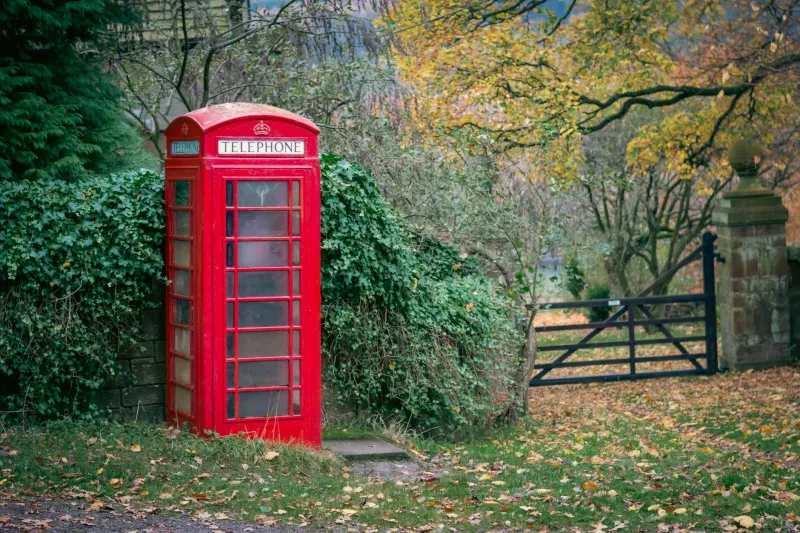
We already have haunted phone boxes, empty motorway services, abandoned shopping centres. Local radio fits neatly into that landscape. It is analogue, municipal, slightly shabby and deeply familiar. It belongs to the Britain of hospital radio, church fetes and traffic reports for roads that no longer exist. When it goes quiet, we notice something missing from the room — and then we start imagining what might still be in it.
So next time you are scanning the dial after midnight, do not be too quick to skip the static. Listen for the jingle. Listen for the phone number. Listen for the presenter who is not quite gone. Dead air is not the absence of a voice. It is the sound of one waiting to be asked back on.