The Stranger in the Flyleaf: A Practical Guide to Haunted Second-Hand Books
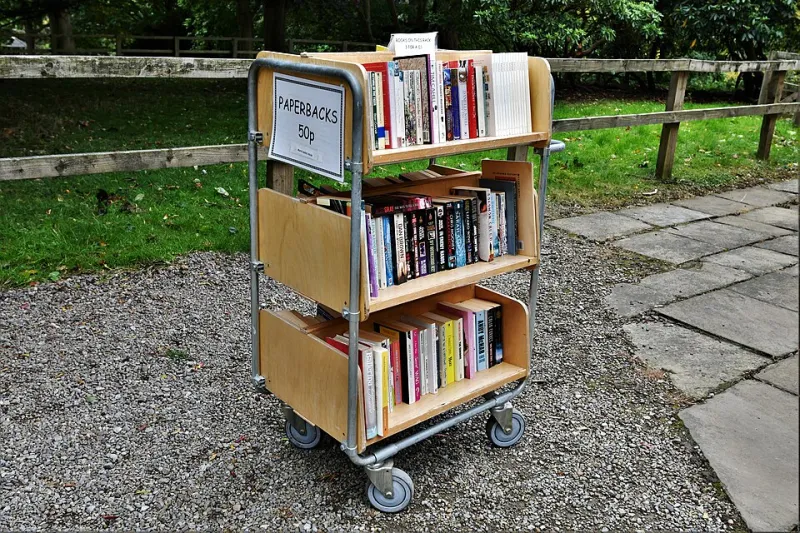
Photo: Michael Garlick , CC BY-SA 2.0, via Wikimedia Commons
At a boot sale somewhere outside a town that doesn’t need naming, a paperback changes hands for 50p. It is a 1980s edition of a novel nobody is looking for. Inside the front cover, in blue biro: To Elaine, who knows why. 1987. Underneath, in different ink, a phone number with an area code that no longer exists.
This is not a ghost story. It is something stranger and more ordinary. A second-hand book is a container for two texts: the printed one and the life around it. The margin notes, the dedications, the bus ticket used as a bookmark — these are tiny hauntings, yes, but they are also evidence. Someone was here. Someone read this. Someone had a reason to write that down.
In 2026, with charity shops full of discarded paperbacks and boot sales still doing brisk business in other people’s old shelves, the haunted book is less a paranormal event than a reading habit. You just have to know what you are looking at.
What Counts as a Haunting
Not every mark is mysterious. A coffee ring is a coffee ring. A bent corner is a bent corner. The haunting begins when a mark implies a person: a name, a date, a message, an argument in the margins, a pressed flower that has gone brown and papery between pages 84 and 85.
The most common hauntings are small. An inscription from a grandmother. A child’s name in wobbly capitals. A bookseller’s pencil price. A train ticket from 1994. A phone number written with the confidence of someone who assumed it would always be useful. A sentence underlined so hard the pen went through the page.
These are not clues to a crime. They are traces of use. The book was not simply owned. It was carried, gifted, argued with, forgotten, sold and found again. That is the social history part, and it is usually more interesting than the printed story.
Reading the Dead Without Summoning Them
There is a temptation, when you find an inscription, to turn the book into a séance. Who was Elaine? Why did the giver know? Was it a love affair, a falling-out, a joke? The honest answer is: you don’t know, and you probably can’t find out. That uncertainty is the point. It is not a puzzle to solve. It is a mood to sit with.
A practical approach is to read the book as an object first. Check the date. Check the publisher. Check whether the handwriting changes. Look at the paper stock, the cover price, the shop stamp. A 1970s Pan paperback with a phone number in it is not the same object as a 2020s reissue with a note from a book group. Context is not glamorous, but it stops the imagination from running off with the evidence.
And be careful with the living. An old phone number is not an invitation. A full name in a book does not mean you should look someone up and send them a message about their dead relative. The haunted book is a private thing that happens to be public. Treat it with the same courtesy you would want if your own margin notes ended up in a charity shop.
The Annotations That Bite
Some marginalia is polite. Some is furious. Both are useful. A reader who writes No! beside a paragraph is telling you something about the book, but also about the decade, the mood, the argument they were having in their head. Angry notes in second-hand paperbacks are a form of amateur criticism, preserved by accident.
There is a particular pleasure in finding a book that has been argued with. Asterisks, exclamation marks, underlined sentences, the word rubbish scrawled beside a love scene. It reminds you that reading is not passive. People fight with books. They throw them across rooms, or at least they write as if they might.
The British paperback tradition makes this especially rich. Penguin orange spines, Pan horror covers, Virago green classics, tatty airport thrillers, war memoirs bought for a father who never read them. Each imprint carries its own social weather. The marginalia adds the personal forecast. A book can be a product and a diary at the same time.
A Short Field Guide to the Haunted Paperback
Start with the dedication. A gift inscription is the most common haunting and the most human. Look for the date, the relationship implied, the awkwardness. To Elaine, who knows why is funnier and sadder than any ghost.
Then the number. Old phone numbers are tiny time capsules. Area codes change. Prefixes vanish. A number written in a book is a line to a house that may no longer have the same people in it, or the same phone, or the same street. Do not call it. Just notice it.
Next, the pressed flower. Or the bus ticket, the receipt, the photograph used as a bookmark. These are accidental reliquaries. They tell you the book was read in transit, in waiting rooms, in beds, in places the printed text never mentions. A pressed flower is not proof of romance. It is proof of someone trying to keep something.
Finally, the angry margin. Read the note, then read the passage it attacks. Ask what the reader wanted the book to be. The gap between those two things is often the most interesting part of the object.
How to Keep a Haunted Book
Do not clean it. Do not erase the inscription because it spoils the cover. Do not add your own name in the same ink and pretend you are part of the chain, unless you are honest about it. If you must record where you found it, write on a separate slip of paper and keep it inside. You are not the owner so much as the next caretaker.
The ghost in a second-hand paperback is not a dead person with unfinished business. It is the ordinary fact that people leave traces, and books are good at holding them. A margin note is a message in a bottle that arrived at the wrong address. You do not have to answer it. You just have to read it properly.