The Cupboard Behind the Vitrine: What UK Museums Won’t Put on Display
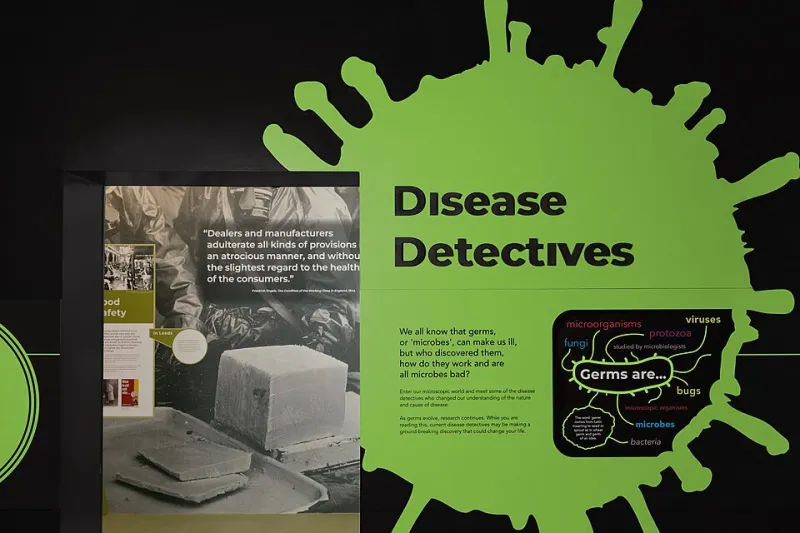
Photo: Museumjack, CC BY 4.0, via Wikimedia Commons
There is a particular kind of hush in a museum store. It is not the respectful silence of a gallery, where visitors lower their voices because a label asks them to. It is the thicker quiet of objects that have been taken out of circulation: boxed, tagged, temperature-controlled and, in some cases, deliberately kept away from the public gaze. In 2026, Britain’s small medical, witchcraft and true-crime museums are some of the most fascinating places in the country. They are also some of the most carefully edited. The question is not what they show. It is what they keep in the basement.
The Object in the Archive
Medical museums have always had a complicated relationship with display. The Thackray in Leeds, the Hunterian in London, the Old Operating Theatre near London Bridge and the Wellcome Collection all trade in objects that were once attached to living bodies: instruments, specimens, prosthetics, photographs, case notes. Some of these are exhibited with care and context. Others sit in stores because the ethical case for showing them has never been settled. Human remains are the obvious example, but they are not the only one. A surgical instrument used in a famous operation, a patient’s letter, a photograph taken without consent — these can be just as charged.
Witchcraft collections bring a different kind of discomfort. The Museum of Witchcraft and Magic in Boscastle holds objects that were made to protect, curse, heal or accuse. Some are folk art; some are personal. A spell bottle, a poppet, a handwritten charm — these are not neutral things. Curators have to decide whether display turns belief into spectacle. For a visitor, a glass case can be thrilling. For a descendant, or for someone who still practises, it can be a violation.
True-crime collections are trickier still. The Metropolitan Police’s Crime Museum — long known as the Black Museum — is not a public attraction. Its holdings are used for training and research, and access is restricted. That restriction is partly practical and partly moral. Items connected to murder cases carry a weight that ordinary museum objects do not. They are evidence, memory and trauma at once. Putting them behind glass for a weekend crowd is not the same as putting a Roman coin on display. Everyone involved knows it.
Who Gets to Decide?
The answer is rarely one person. Curators, trustees, ethics committees, conservators and, increasingly, descendant communities all have a say. The Human Tissue Act 2004 gave museums a legal framework for some of this, but law is only the floor. The real work happens in meetings where people argue about dignity, consent and public benefit. An object might be kept back because it is physically fragile. It might be kept back because it is culturally sensitive. It might be kept back because no one can agree on the caption.
This is where British attitudes become visible. We are a country that loves a ghost story but flinches at a gallstone. We will queue for a true-crime podcast but expect museums to behave with decorum. We want the shiver, but we also want to be told that the shiver is educational. The basement is where that contradiction is managed. It is where the collection’s id goes: the objects that are too raw, too personal, too sad or too weird for the main floor.
The Ethics of the Unseen
There is a lazy assumption that hidden objects are hidden because they are dangerous. Usually they are hidden because they are complicated. Display can educate and challenge stigma. It can also exploit. Concealment can protect the vulnerable. It can also protect institutions from their own histories. A museum that never shows its colonial loot, its unethical acquisitions or its medical failures is not being sensitive; it is being selective.
The better question is not ‘can the public handle this?’ but ‘who is this for?’ A specimen without consent is not automatically redeemed by a thoughtful label. A crime relic is not automatically justified by a true-crime audience. The most ethical choice is sometimes an empty case with a clear explanation: this object exists, this is why we are not showing it, this is who we consulted. That is less exciting than a jar in a spotlight. It is also more honest.
What the Basement Says About Britain
Britain’s small museums are not just cabinets of curiosity. They are arguments about death, shame and spectacle. They show that we are fascinated by the body, by violence, by magic and by the past, but we are also anxious about being seen to enjoy it too much. The basement is the compromise. It lets us keep the objects without letting them loose.
So next time you stand in a dim gallery and read a label that says ‘not on display’, remember that the sentence is doing more work than it looks. It is a curatorial decision, an ethical pause and a small piece of national self-portraiture. The most revealing exhibit in the building might be the one you are not allowed to see.