The Turnstile That Never Logged Off: Britain’s Dead Theme Parks and Their YouTube Afterlives
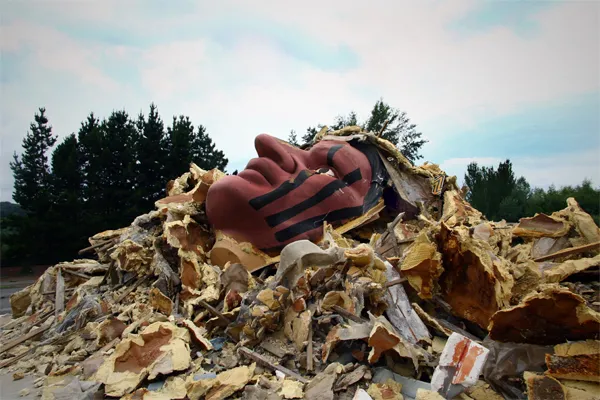
Photo: No machine-readable author provided. Lio112~commonswiki assumed (based on copyright claims)., CC BY-SA 3.0, via Wikimedia Commons
There is a particular sound in the videos: wind buffeting a microphone, the low hum of a drone, and then nothing. No screams. No tinny pop from the PA. Just a corkscrew of track turning green with moss and a queue-line barrier that still asks you to stand behind it. Britain’s abandoned theme parks have become a genre of their own on YouTube — part travelogue, part ghost story, part inadvisable trespass — and in 2026 the audience for them shows no sign of thinning.
A Turnstile With No One Behind It
The formula is simple enough. Someone finds a way into a closed park — Camelot in Lancashire, the American Adventure in Derbyshire, a dozen smaller seaside pleasure grounds whose names survive mainly in local memory — and films what remains. The camera lingers. It is the lingering that matters. A faded mascot painted on a chipboard wall. A log flume half-full of black water. A sign for a ride that no longer exists, still pointing the way. These shots do not explain; they wait. And in the comments, people arrive to explain for them.
You will find the same sentences under almost every video: I remember this place. I cried when it closed. My dad took me here. I swear there was a ride behind that fence. The threads turn into a digital wake, full of people who never met but share a childhood landscape that has been demolished, sold, or left to bramble. That is the curious part. The parks were not cathedrals. They were commercial ventures with sticky carpets and overpriced chips. Yet their disappearance has given them a folklore they never earned while open.
The Drone Is the New Ghost
The technology has changed the mood. Early urbex videos were shaky, ground-level, deliberately illicit. Now a drone can rise above the perimeter fence and show the whole site at once: the bones of a coaster, the empty car park, the office block with its windows gone. From above, the parks look like diagrams of lost fun. The aerial shot is strangely emotionless, which is why it works. It does not need to say that something is missing. The missing thing is the crowd.
Vloggers have learned that the silence sells. They slow the edit. They add a low synth drone. They leave in the moment when a security car appears in the distance, because that tiny flicker of consequence reminds you this is not a game. But the best videos are not the most daring. They are the ones that treat the place like an archive. A close-up of a ticket window. A pan across a menu board. A shot of a bin bag that has been there so long it has become part of the landscaping. These details do what a narration cannot: they make the park feel recently left, as if the visitors are only on a long queue.
Nostalgia With a Monetisation Policy
Here is where the discomfort creeps in. Many of these parks are on private land. Some are owned by councils, some by developers, some by people who would rather not have strangers with cameras and drones turning their liability problem into content. Trespass is not a victimless hobby. Nor is monetised nostalgia. When a channel runs ads against footage of a place that still belongs to someone, and when commenters treat that place as public property because they once bought a wristband there, the line between curiosity and entitlement gets smudged.
The ethical questions are not abstract. Is it right to fly over a site without permission? To film inside a building that may be unsafe? To name a location so precisely that others follow? Some vloggers blur the approach route; others do not. Some give the local history; others just want the thumbnail of a rusting coaster. The audience rewards the latter. We click on the more transgressive version, then complain in the comments that someone has broken in. That contradiction is very British: a polite appetite for rule-breaking, served with a disclaimer.
What We’re Really Watching
Perhaps the reason these videos endure is not the parks themselves but the promise they break. A theme park is a machine for turning anticipation into a scream. When it closes, the anticipation has nowhere to go. The empty queue line is that feeling left standing. It is the same reason we slow down for a closed shop or a boarded-up pub. Britain is full of places that were once the centre of someone’s Saturday, and the internet has given us a way to revisit them without the sadness of the car park.
The best of these channels know that. They do not pretend the parks are haunted, because they do not need to. The haunting is in the detail: the faded safety notice, the ride height sign for children who are now adults, the loop of music that no one can identify. In 2026, the dead theme park is less a place than a mood — a reminder that leisure leaves ruins too, and that our memories are often better maintained by strangers with drones than by the companies that built them.
That is the uneasy bargain. We get to look. The past gets to stay closed. The ride, in the only way that matters, never quite stops.