Who’s Haunting the Semi-Detached? The Curious Folklore of Britain’s Blue Plaques
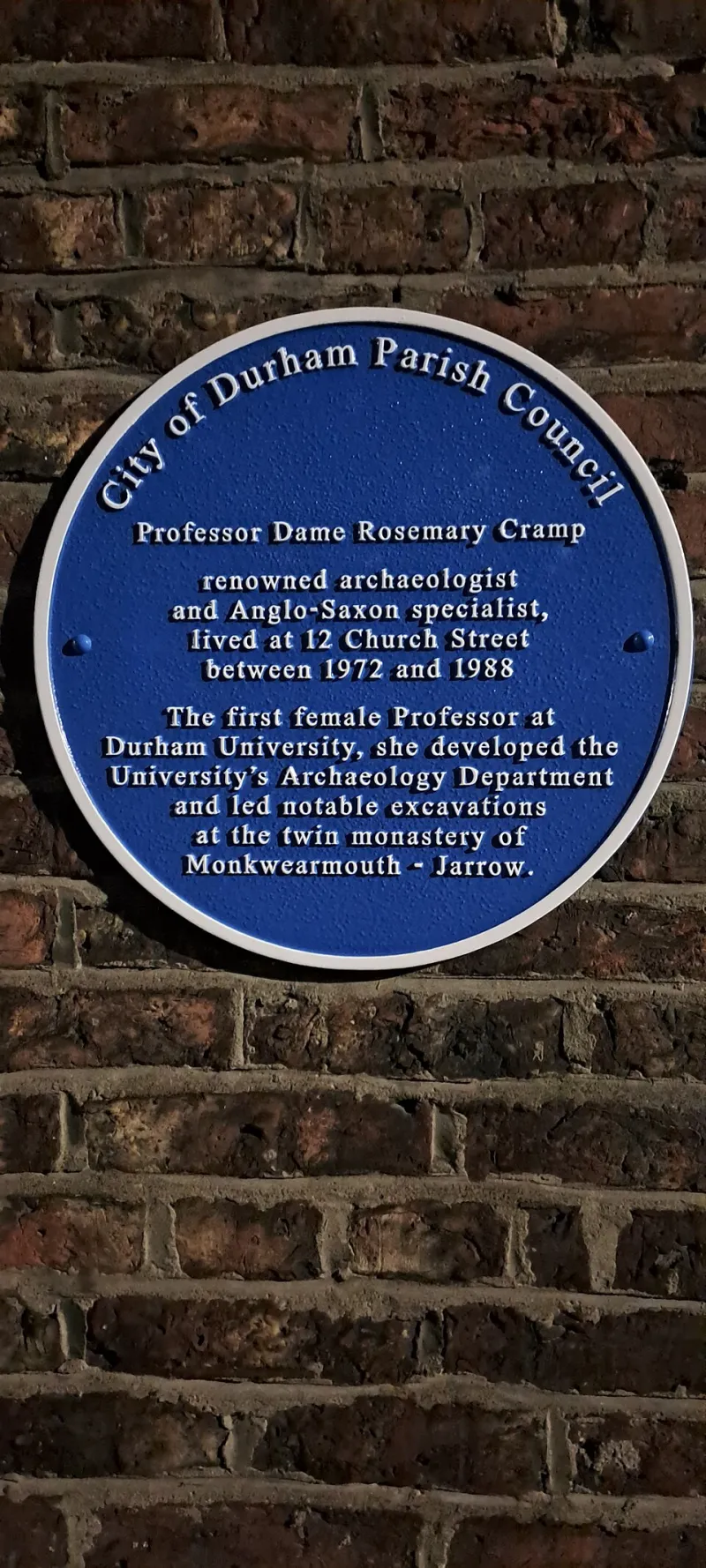
Photo: Eritha, CC BY-SA 4.0, via Wikimedia Commons
Walk down a certain kind of British street and you will eventually meet one: a small blue disc, fixed at eye level, announcing that somebody of consequence once slept, wrote, argued or died behind the net curtains. It is meant to be a footnote in the built environment, a civic nod to history. In practice, it often behaves like a stage direction. The house stops being a house. It becomes a setting.
That drift from fact to atmosphere is the strange afterlife of the blue plaque. Official schemes, local societies and heritage bodies put them up to remember people. The rest of us use them to imagine things. A plaque can turn a perfectly ordinary semi into a place with a past tense, and a past tense is only ever a few steps away from a ghost story.
The Disc as Doorway
Not every plaque is blue, and not every blue plaque is official. In London, English Heritage runs the best-known scheme, while councils, civic societies and local history groups mark their own candidates across the UK. The rules vary, the colours vary, and so does the level of research. What stays consistent is the effect. A plaque gives a building a character, and character is exactly what estate agents, tour guides and curious neighbours are looking for.
In 2026, that effect is easy to spot online. A flat is listed as being in a building associated with a Victorian reformer. A terraced house is described as part of a conservation area with notable former residents. A local walking tour promises hidden histories and ends up lingering outside a plaque-covered façade while somebody tells a story about a light that never goes off. None of this is necessarily dishonest. It is just that commemoration has a way of becoming narrative, and narrative likes a little chill.
The plaque is not a ghost. It is a permission slip. It says: somebody important was here, and now you may wonder what remains.
When Biography Becomes Atmosphere
Part of the problem is that plaques commemorate the wrong tense. They tell you who lived there, but the imagination immediately asks how they left. A house associated with a writer invites thoughts of unfinished manuscripts. A plaque to a doctor suggests late-night callers. A reformer or campaigner brings the possibility of secret meetings, cold rooms and arguments that never quite ended. The official fact is a biography. The folklore is a mood.
There is also the simple weirdness of living in a remembered house. Most of us expect our homes to be private and forgettable. A plaque makes yours public property in a small way. People stop outside. They point. They take photographs. They may know more about your front room’s former occupant than you know about your neighbours. The house is remembered more for who died there than who currently pays the council tax, and that can make everyday domestic life feel oddly provisional.
This is why plaque folklore so often centres on repetition: footsteps, typing, bells, lamps, the same route through the same hallway. Ghost stories are rarely interested in grand events. They are interested in routine that refuses to stop. A blue plaque gives that routine a name and a date.
A Field Guide to Plaque-Adjacent Legends
These are not verified hauntings. They are recurring story types, the kind that gather around commemorative houses like damp around a chimney breast.
The Typing That Stops at Dawn
A plaque to a novelist or journalist, a bedroom window, and a neighbour who swears they once heard keys tapping in the early hours. The story usually adds that the typing stopped when the house changed hands, or that it only happens when a manuscript is left unfinished nearby. It is less a ghost than a metaphor with a keyboard.
The Cold Meeting Room
Common around plaques to campaigners, radicals and political organisers. The front room is always colder than the rest of the house. A chair is always slightly out of place. The legend says the meeting is still in session, which is a very British way of saying that history has not quite adjourned.
The Bell With No Patient
A doctor’s plaque, an old doorbell, and a ringing at hours when no caller could reasonably be expected. Sometimes the story involves a patient who never arrived. Sometimes it is a summons to a house that has since been divided into flats. Either way, the bell is doing the work that a plaque cannot: making a professional life feel present after the fact.
The Lamp in the Sickroom
A plaque to a philanthropist or nurse, a window that glows when the room is empty. This one tends to be gentler than the others. It is a story about care that outlasts the carer, which is either comforting or deeply unsettling depending on how long you have been waiting for a plumber.
The Running Child
Usually attached to a plaque marking a childhood home or a schoolroom. Footsteps overhead, a door closing, a laugh in a hallway. The child is rarely named in the legend. The plaque supplies the adult biography, and the folklore supplies the part the biography left out.
Questions for Anyone Viewing a Historic Property in 2026
If you are house-hunting and the listing leans hard on a blue plaque, it is worth asking a few practical questions before you let the atmosphere do your thinking for you.
- Which scheme put the plaque up, and what exactly does it commemorate? Residence, birth, death, a short stay, a workshop, a site that no longer exists?
- Is the plaque mentioned in the listing as a fact, a selling point or a story? Those are three different things.
- Has the building been divided, extended or renamed since the person lived there? A plaque can survive a total renovation.
- Who maintains the plaque, and does anyone local run tours past it?
- Is there an archive, local history group or conservation officer who can tell you what is documented and what is simply repeated?
- Would you mind strangers stopping outside? A plaque is small, but it changes the way a house sits in public.
The House You Actually Live In
The blue plaque is a useful thing. It records lives that might otherwise be smoothed away by redevelopment, and it gives streets a sense of depth. But it also teaches us to read houses as containers for other people. That is fertile ground for folklore, and folklore does not need proof. It needs a date, a name and a window.
So the next time you pass a little disc on a brick wall, resist the urge to turn it into a séance. Look at the house as it is now: the wheelie bin, the doorbell, the energy certificate, the person who actually lives there. The plaque is memory. The ghost story is what memory becomes when nobody is checking the source. In Britain, that is usually where the interesting part starts.